Table Of Contents:
- What to Expect From Your First Commercial Carpet Cleaning Service: A Complete Guide to Professional Office Carpet Care
- What Are Commercial Carpet Cleaning Services and How Do They Work?
- What Types of Cleaning Methods Are Used in Commercial Carpet Cleaning?
- How Does Professional Carpet Cleaning Differ From Regular Cleaning?
- What Equipment and Technology Should You Expect During Service?
- What Are the Key Benefits of Commercial Carpet Cleaning for Businesses?
- How to Prepare Your Business for the First Commercial Carpet Cleaning Appointment?
- How to Choose the Right Commercial Carpet Cleaning Service for Your Business?
- What Are the Typical Costs of Commercial Carpet Cleaning for Offices?
- What Professional Carpet Cleaning Tips Can Help You Maximize Results?
- What Can You Expect During and After Your First Commercial Carpet Cleaning Service?
- Detailed Tables and Lists
- What Professional Carpet Cleaning Tips Can Help You Maximize Results? (Additional List)
- What Can You Expect During and After Your First Commercial Carpet Cleaning Service?
- Frequently Asked Questions
- Final Thoughts
What to Expect From Your First Commercial Carpet Cleaning Service: A Complete Guide to Professional Office Carpet Care
Commercial carpet cleaning ensures your office carpets receive deep-cleaning that goes far beyond everyday vacuuming. In busy work environments where indoor air quality, safety, and appearance matter, a professional carpet cleaning service can extend the life of your carpet while improving your workspace. Companies like Freedom Cleaning Solutions have built a reputation for reliable cleaning services tailored to commercial needs. This guide explains what commercial carpet cleaning is, how it works, and what to expect during and after the service.
Commercial spaces experience heavy traffic that quickly accumulates dirt, spills, and allergens. These issues can harm indoor air quality and cause premature wear on carpet fibers. Advanced cleaning techniques—with industrial-grade equipment and eco-friendly solutions—eliminate deep-seated dirt and allergens. A thorough pre-inspection, targeted treatment, deep cleaning, and final quality checks ensure lasting results. Moreover, these services work around your operating hours, keeping your workspace productive and safe.
Transitioning to specifics, the following sections break down each aspect of commercial carpet cleaning so you can make an informed decision.
What Are Commercial Carpet Cleaning Services and How Do They Work?
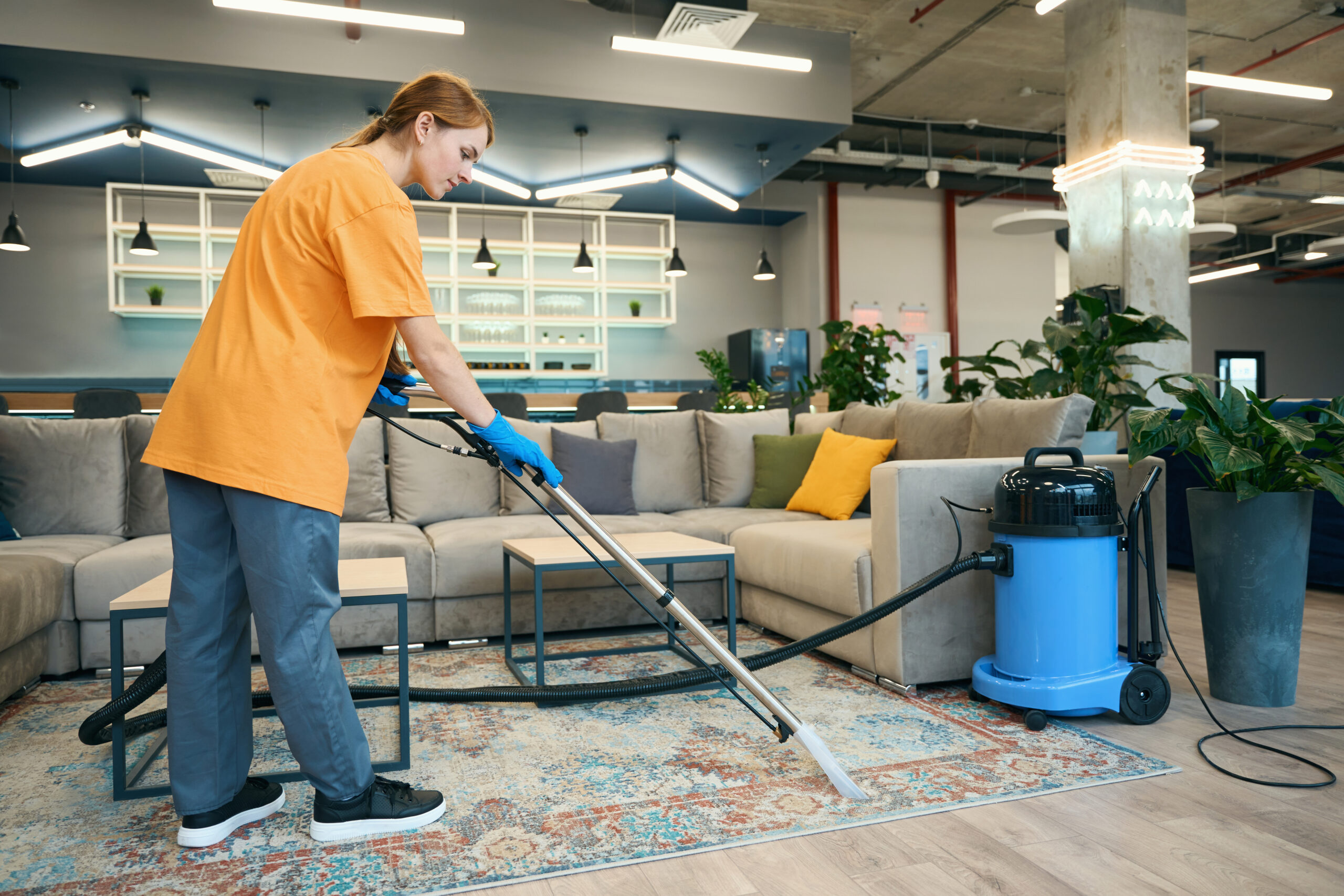
Commercial carpet cleaning focuses on deep cleaning, stain removal, and overall maintenance in high-traffic office spaces. The process starts with a comprehensive inspection followed by targeted pre-treatment of stains and heavily soiled areas. Next, heated water extraction or steam cleaning dissolves dirt and contaminants, and a final grooming step restores the carpet’s appearance.
Technicians use truck-mounted extractors, rotary floor machines, and HEPA-filtered vacuums to ensure even the most compact dirt is removed. They often work during off-peak hours to minimize disruption. Eco-friendly cleaning agents are selected to decompose quickly, reducing chemical exposure risks while maintaining a healthier workspace. Providers also supply detailed cleaning reports and maintenance suggestions to keep your carpet pristine between professional appointments.
What Types of Cleaning Methods Are Used in Commercial Carpet Cleaning?
Various methods are available, each chosen based on the carpet type and soiling level:
Hot Water Extraction (Steam Cleaning): Heated water with cleaning solutions is applied then immediately vacuumed, effectively sanitizing fibers.
Encapsulation: A crystallizing polymer bonds with dirt; once dried, the powder is vacuumed away. This method reduces chemical and water usage.
Bonnet Cleaning: A rotating absorbent pad lifts surface soils for quick turnaround in high-traffic areas.
Dry Cleaning: Uses minimal moisture and specialized compounds, ideal for delicate fibers.
Experts decide the best approach during a pre-cleaning inspection, tailoring the method to your specific needs.
How Does Professional Carpet Cleaning Differ From Regular Cleaning?
Unlike routine vacuuming that only lifts surface debris, professional cleaning uses deep extraction to remove built-up soil and stains embedded in the fibers. Commercial-grade equipment and specially formulated cleaning agents deliver results that consumer products cannot match. Professional services also include a detailed inspection, customized treatment plans, and post-cleaning quality checks. These steps extend the carpet’s life, reduce future cleaning frequency, and improve indoor air quality—all while minimizing disruption to your business.
What Equipment and Technology Should You Expect During Service?
Expect state-of-the-art equipment designed for high-performance cleaning:
Truck-Mounted Hot Water Extraction Systems: Deliver high heat and powerful suction for a thorough clean.
HEPA-Filtered Vacuums: Capture microscopic allergens and improve overall air quality.
Rotary Machines & Deep Extractors: Ensure multiple passes target hidden dirt and edge areas.
Digital Mapping and Scheduling: Streamline service coordination.
Eco-Friendly Systems: Utilize biodegradable agents and water reclamation to reduce environmental impact.
Together, these technologies ensure superior cleaning performance with minimal downtime.
What Are the Key Benefits of Commercial Carpet Cleaning for Businesses?
Professional carpet cleaning provides measurable benefits:
Improved Indoor Air Quality: Removal of allergens, bacteria, and dust mites supports a healthier workspace.
Extended Carpet Life: Deep cleaning prevents premature wear, reducing long-term replacement costs.
Enhanced Appearance: A pristine carpet contributes to a positive first impression for clients.
Increased Safety: Clean, dry carpets reduce slip hazards and the risk of mold growth.
Energy Efficiency: Less dirt improves HVAC efficiency, potentially lowering energy costs.
Boosted Employee Morale: A cleaner environment promotes productivity and reduces sick days.
Lower Maintenance Costs: Regular care minimizes future repair and replacement expenses.
How Does Carpet Cleaning Improve Office Air Quality and Hygiene?
Deep cleaning removes dust, pollen, and allergens beyond what standard vacuuming can achieve. Using methods like hot water extraction along with HEPA filtering eliminates odor-causing agents and bacteria. This comprehensive cleaning not only improves air quality but also prevents mold and mildew, ensuring a safe, hygienic environment for employees.
Can Regular Cleaning Extend the Life of Commercial Carpets?
Consistent professional cleaning removes dirt that acts as an abrasive, preventing fiber degradation. By addressing spills and stains promptly with deep cleaning methods, carpets can last significantly longer—often up to 50% longer than unmaintained ones. This proactive maintenance reduces both the frequency of replacements and long-term costs.
How Does Professional Cleaning Enhance Workplace Appearance and Safety?
A clean carpet contributes to a polished office environment that reassures clients of your commitment to quality. Regular cleaning removes residues that can cause slippery surfaces, lowering accident risks. Moreover, by eliminating allergens and pathogens, professional cleaning supports a safer, healthier workspace and boosts overall productivity.
How to Prepare Your Business for the First Commercial Carpet Cleaning Appointment?
Proper preparation ensures an efficient service:
What Should You Do Before the Cleaning Team Arrives?
Before the appointment, clear the area of clutter and secure fragile items. Conduct a pre-cleaning walk-through to identify high-traffic or problematic areas. Inform your staff about the schedule, ensuring pathways remain clear to allow seamless access. This organization helps technicians focus solely on cleaning without hindrance.
How to Communicate Your Cleaning Needs and Schedule Effectively?
Effective communication can be achieved by:
Scheduling during off-peak hours (after work or on weekends).
Creating a checklist of challenges like stubborn stains or heavily used zones.
Sharing a brief office layout and designating a point of contact.
Providing written instructions, which help set clear expectations for the service.
What Areas Should You Prioritize for Cleaning in Your Office?
Prioritize high-traffic locations such as entrances, reception, conference rooms, and hallways. Areas near workstations and break rooms, prone to spills and food particles, should also receive extra attention. A pre-inspection can help pinpoint any spots that need special treatment, ensuring no area is overlooked.
How to Choose the Right Commercial Carpet Cleaning Service for Your Business?
Selecting the right service involves careful research and inquiry. Consider factors such as pricing, technology, eco-friendly practices, and overall service quality. Customer testimonials and service guarantees can help verify reliability. A clear understanding of your space’s specific needs further guides your decision.
What Questions Should You Ask Potential Carpet Cleaning Providers?
Ask questions like:
– What cleaning methods and equipment do you use?
– Are you licensed and insured?
– Can you provide client references or testimonials?
– What is your service guarantee and procedure for post-cleaning issues?
– How will you accommodate our scheduling needs?
Also, inquire about their eco-friendly practices and whether they can tailor their approach to different carpet types. A detailed discussion on pricing structures is essential to avoid unexpected charges.
How Important Is Eco-Friendly Cleaning in Commercial Carpet Services?
Eco-friendly cleaning methods are increasingly important. Providers using biodegradable agents and low-moisture techniques not only reduce environmental impact but also contribute to improved indoor air quality. These practices support sustainable business operations and comply with environmental regulations, often enhancing your brand image.
What Should You Know About Pricing and Service Guarantees?
Understand the pricing model—whether charged per square foot, per room, or as a bundled package. Ask for detailed, itemized quotes and clarify any extra fees for stain removal or odor elimination. Transparent communication regarding service guarantees reassures you that any post-cleaning issues will be resolved without additional cost.
What Are the Typical Costs of Commercial Carpet Cleaning for Offices?
Costs vary based on area size, level of soiling, and services provided. Common models include per square foot or per room rates; additional fees may apply for specialized treatments. It is advisable to obtain multiple detailed quotations to compare pricing effectively and ensure there are no surprises.
How Is Commercial Carpet Cleaning Priced: Per Square Foot or Per Room?
For larger or open-plan offices, per square foot pricing is common because it ensures every inch is accounted for. Alternatively, per room pricing simplifies budgeting when room sizes are fairly uniform. Clarify any extra charges, especially for high-traffic areas or additional treatments.
Are There Additional Fees for Stain Removal or Odor Elimination?
Many providers charge extra for advanced treatments such as stubborn stain removal or odor elimination. These additional fees cover extra labor and specialized agents. Discuss these costs upfront to understand what is included in the base price and what services incur a surcharge.
How to Get Accurate Quotes and Avoid Hidden Charges?
Request a detailed facility inspection so the provider can tailor an itemized quote. Ask for written estimates and clarify conditions under which extra fees might apply, such as emergency services or out-of-hours work. Comparing multiple quotes and reading recent testimonials can help identify fair, transparent pricing.
What Professional Carpet Cleaning Tips Can Help You Maximize Results?
Following professional tips can extend your carpet’s life and maintain its appearance:
How Often Should Commercial Carpets Be Professionally Cleaned?
For high-traffic areas, it’s typically recommended to schedule professional cleaning every three to six months. In areas prone to spills or high dust accumulation, more frequent cleanings—sometimes even monthly—may be necessary. Regular deep cleaning complements routine vacuuming and spot treatment.
What Maintenance Steps Can You Take Between Professional Cleanings?
Between professional cleanings, maintain your carpet by:
• Vacuuming daily with a HEPA-filtered machine to remove loose debris.
• Promptly blotting spills with a dedicated spot remover.
• Implementing a no-shoes policy in critical areas.
• Periodically grooming with a carpet rake to restore pile alignment.
How to Handle Stains and Spills Before the Cleaning Service?
Address spills immediately by blotting (not rubbing) with a clean, dry cloth and a professional-grade spot remover. Train staff to follow these protocols, ensuring that stains do not set into the fibers. A proactive approach minimizes damage and improves the overall effectiveness of the deep cleaning.
A quick summary of maintenance tips:
1. Regular Vacuuming
2. Immediate Spill Response
3. No-Shoes Policy
4. Routine Grooming
5. Scheduled Deep Cleaning
6. Accessible Cleaning Supplies 7. Staff Training
What Can You Expect During and After Your First Commercial Carpet Cleaning Service?
Your first service should be structured and thorough. Initially, a technician performs a pre-inspection to assess high-traffic areas, stains, and any special cleaning needs. The process then proceeds with pre-treatments, deep cleaning (often with hot water extraction), and finishing with a grooming step to restore the carpet’s appearance.
After cleaning, a quality evaluation is performed and recommendations for routine maintenance are provided. Most services are scheduled during off-peak hours to minimize disruption.
How Long Does a Typical Commercial Carpet Cleaning Take?
For a medium to large office, expect the process to take three to eight hours. Additional time may be needed for extensive pre-treatment or extra services like spot removal. A detailed time estimate should be provided before work begins.
What Are the Common Post-Cleaning Procedures and Drying Times?
Following cleaning, heavy-duty extraction removes most moisture from the carpet. A grooming or brushing step then realigns the pile, ensuring even drying. Drying typically takes between four to eight hours, depending on temperature, humidity, and airflow. It is important to restrict foot traffic until the carpet is completely dry.
How to Evaluate the Quality of the Cleaning Service Provided?
Quality can be assessed by examining the uniformity of stain removal, brightness of carpet color, and overall texture. Customer feedback, follow-up surveys, and satisfaction guarantees are useful indicators. Continued cleanliness over time also reflects the effectiveness of the service.
Detailed Tables and Lists
Below is a table summarizing key equipment, methods, and benefits of professional commercial carpet cleaning:
| Equipment / Method | Description | Benefit | Application Scale |
|---|---|---|---|
| Truck-Mounted Hot Water Extraction | Heated water with high-powered suction for deep cleaning | Removes deeply embedded dirt and allergens | Large commercial spaces |
| HEPA-Filtered Vacuum Systems | Captures microscopic allergens | Enhances indoor air quality | High traffic areas |
| Encapsulation Method | Polymer bonds with dirt to form a removable powder | Eco-friendly and minimal water use | Routine maintenance |
| Bonnet Cleaning | Rotating absorbent pad for surface cleaning | Quick turnaround for high-traffic zones | Superficial cleaning |
| Dry Cleaning | Minimal moisture with specialized compounds | Prevents damage to delicate fibers | Sensitive carpet types |
| Air Movers and Dehumidifiers | Speeds up drying | Reduces downtime and re-soiling risk | Rapid business re-entry |
| Digital Mapping and Scheduling | Technology-based planning | Enhances precision and minimizes disruption | Large-scale operations |
Another list summarizes the key benefits:
- Improved Indoor Air Quality: Removes allergens, bacteria, and dust.
- Extended Carpet Life: Reduces fiber degradation and replacement costs.
- Enhanced Appearance: Creates a polished, professional environment.
- Increased Safety: Minimizes slip hazards and mold growth.
- Energy Efficiency: Improves HVAC performance and airflow.
- Boosted Employee Morale: Creates a healthier, more productive workspace.
- Lower Maintenance Costs: Reduces future repair and replacement needs.
A third table outlines cost factors:
| Cost Factor | Pricing Model | Key Considerations | Impact on Budget |
|---|---|---|---|
| Per Square Foot Pricing | Per area measurement | Accurate for variable sizes | Suitable for large areas |
| Per Room Pricing | Fixed fee per room | Simplifies budgeting | Best for uniform room sizes |
| Additional Stain/Odor Charges | Extra service fees | Varies with stain/odor severity | May increase overall cost |
| Scheduling Outside Regular Hours | Premium rates | Reduces business disruption | Higher overall fees possible |
| Eco-Friendly Service Add-ons | Surcharge for green products | Uses biodegradable agents | Marginally higher cost |
| Comprehensive Service Packages | Bundled pricing | Multiple cleaning steps and guarantees | Often provides cost savings |
| Maintenance Agreements | Monthly/annual contracts | Long-term discounts and consistency | Reduces unexpected costs |
What Professional Carpet Cleaning Tips Can Help You Maximize Results? (Additional List)
To maintain optimal carpet condition:
- Implement a Routine Vacuuming Schedule: Daily use of HEPA-filtered vacuums.
- Act on Spills Immediately: Blot spills with a designated spot remover.
- Zone-Based Cleaning: Focus on high-traffic and problematic areas.
- Regularly Rotate Furniture: Distribute wear evenly.
- Maintain a No-Shoes Policy: Reduce dirt from tracked-in debris.
- Schedule Professional Cleanings: Align deep cleaning with usage patterns.
- Monitor Cleaning Performance: Use staff feedback to assess service effectiveness.
What Can You Expect During and After Your First Commercial Carpet Cleaning Service?
Your first cleaning service is designed to set a high standard. It begins with a pre-inspection, followed by pre-treatment, deep cleaning, and a final grooming process. Post-cleaning, a quality check and recommendations for maintenance are provided. Scheduling during off-peak hours ensures minimal disruption to your operations.
How Long Does a Typical Commercial Carpet Cleaning Take?
Typically, a cleaning takes between three to eight hours for a medium to large office. Extended time may be required for intensive pre-treatment and additional services such as spot removal.
What Are the Common Post-Cleaning Procedures and Drying Times?
Post-cleaning, heavy extraction removes most moisture, and grooming helps realign the fibers. Drying takes about four to eight hours. It is essential to limit traffic until the carpet is fully dry.
How to Evaluate the Quality of the Cleaning Service Provided?
Assess quality by noting consistent stain removal, uniform carpet appearance, and overall texture. Customer feedback and follow-up surveys, along with satisfaction guarantees, help ensure high service standards.
Frequently Asked Questions
Q: What factors determine the cost of commercial carpet cleaning? A: Costs depend on the area size, level of soiling, cleaning methods, and additional services like stain removal or odor elimination. Providers may charge per square foot, per room, or offer bundled packages. Always request an itemized quote to avoid hidden fees.
Q: How often should my business schedule carpet cleaning services? A: High-traffic areas typically require cleaning every three to six months, while lower-traffic areas may need less frequent cleaning. Regular vacuuming and spot cleaning help maintain appearance between professional visits.
Q: Are the cleaning agents used in commercial carpet cleaning eco-friendly? A: Many services now use biodegradable, non-toxic cleaning agents that minimize environmental impact and improve indoor air quality—ideal for businesses focused on sustainability.
Q: What should I do to prepare my office before the cleaning team arrives? A: Secure fragile items, remove personal belongings from carpeted areas, and ensure clear pathways. Inform staff of the schedule so there is minimal movement during the cleaning process.
Q: How can I ensure that the carpet cleaning service meets my business needs? A: Ask potential providers detailed questions about their equipment, methods, service guarantees, and client testimonials. Request a pre-inspection and a written service agreement outlining the scope and duration of the cleaning.
Q: What are the typical drying times after a commercial carpet cleaning service? A: Drying times typically range from four to eight hours, depending on conditions. Professional services use air movers and dehumidifiers, but restrict foot traffic until the carpet is completely dry.
Q: How does professional carpet cleaning improve workplace safety? A: By removing hidden contaminants and moisture that can cause slips or mold growth, professional cleaning creates a safer, healthier workspace, reducing accident and illness risks.
Final Thoughts
Commercial carpet cleaning is more than an aesthetic upgrade—it is an investment in the health, safety, and longevity of your office. Understanding the specialized methods, advanced equipment, and careful preparation involved enables businesses to choose services that combine cost-efficiency with superior results. Regular professional cleaning enhances indoor air quality, extends carpet life, and improves overall workplace safety, contributing to a productive, appealing environment. Aligning your cleaning schedule with expert recommendations and industry best practices will help maintain a pristine workspace that benefits both employees and customers.