What to Expect from Professional Commercial Cleaning
A professional office cleaning service delivers more than tidy floors and empty trash bins; it creates a healthier, safer, and more productive workplace that supports daily operations and client-facing impressions. This guide explains what “office cleaning services near me” typically include, how commercial cleaning and janitorial services protect staff and assets, and which selection criteria matter when evaluating local providers. Readers will gain clear expectations about core tasks, scheduling and disruption management, staff vetting and equipment choices, quality-assurance practices, cost drivers, and how to choose a dependable partner for Central Florida facilities. The article also maps common service categories—janitorial, disinfection, carpet and floor care, and green cleaning solutions—and provides practical checklists, comparison tables, and decision tools that facility managers and office leaders can use today. Finally, a focused company profile explains how a veteran-owned local provider implements these industry standards while offering specialized services and flexible plans.
What Should You Expect from Professional Office Cleaning Services?
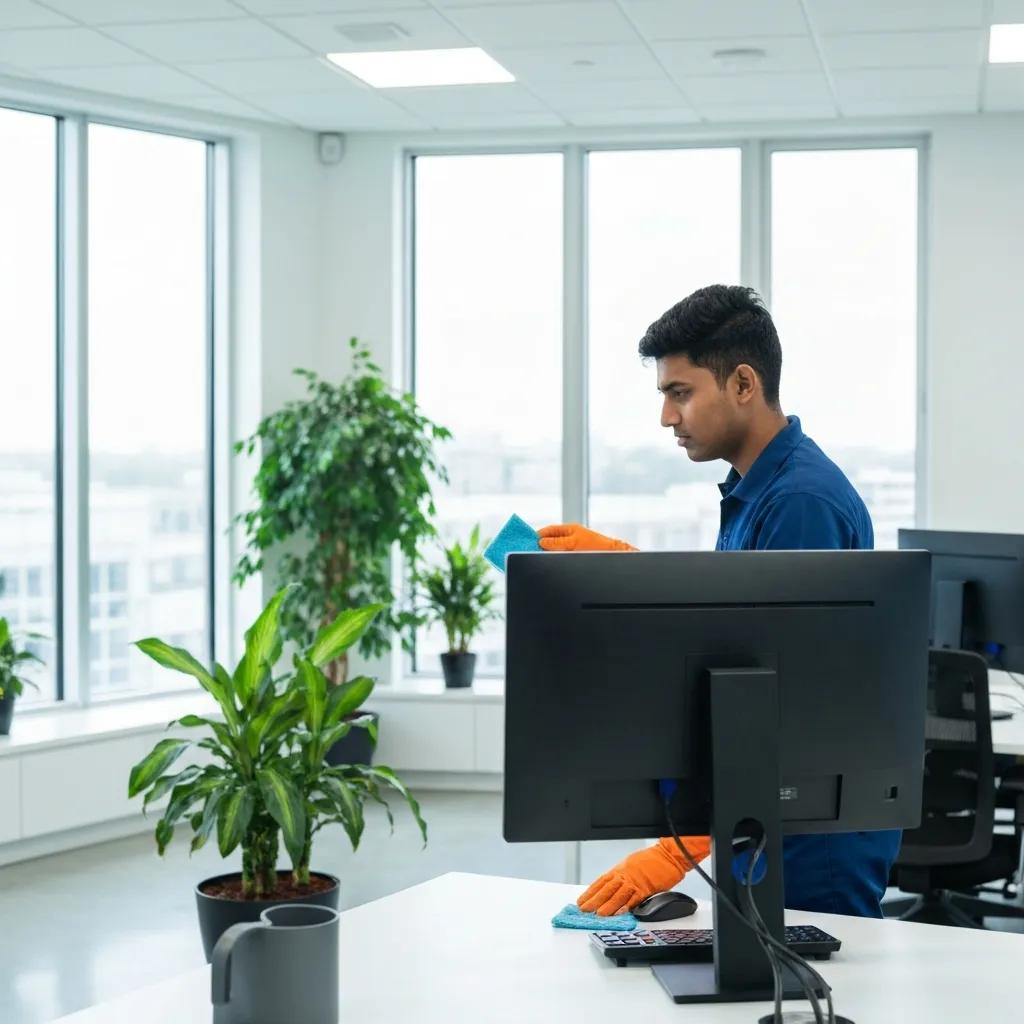
Professional office cleaning services are structured programs that combine routine daily maintenance with periodic deep-cleaning and targeted disinfection to maintain hygiene, appearance, and asset longevity. A robust program addresses high-touch transmission points, restroom sanitization, breakroom maintenance, vacuuming and dusting, and scheduled deep services such as carpet extraction and floor stripping. The reason this layered approach works is that consistent routine cleaning controls soils and microbes before they accumulate, while periodic restorative treatments preserve finishes and prevent costly restoration. As a result, businesses gain measurable outcomes: fewer sick days, improved client impressions, and reduced long-term maintenance costs.
Routine agreements are typically tailored by facility size and industry, with clear scopes for daily tasks versus add-on periodic services; this customization minimizes service gaps and clarifies expectations. Transparent scheduling and documented checklists are essential so staff and managers share the same definition of “clean.” Next we review the concrete core tasks that are commonly included in office cleaning contracts and how frequency affects outcomes.
What Core Services Are Included in Commercial Office Cleaning?
Core commercial office cleaning typically covers surface cleaning, trash removal, restroom maintenance, floor care basics, and focused attention on high-touch surfaces that spread pathogens. Daily tasks often include emptying waste receptacles, dusting reachable surfaces, vacuuming or sweeping, restroom cleaning with disinfectant protocols, and sanitizing breakroom surfaces; these actions lower visible soil and microbial loads in the occupied environment. Periodic tasks that may be scheduled weekly or monthly include glass cleaning, detailed dusting of vents and light fixtures, and spot carpet extraction, which address accumulations that routine visits cannot fully remove. Add-on or specialty services—such as full carpet hot-water extraction, deep floor stripping and waxing, or facility-wide disinfection—are quoted separately because they require different equipment, longer downtime, and trained technicians.
This checklist shows common core tasks facility managers should confirm in agreements:
- Daily surface cleaning and trash removal covering offices and common areas.
- Restroom sanitization and supply checks with documented disinfectant use.
- Floor maintenance including vacuuming and hard-floor sweeping/mopping.
- High-touch surface disinfection for door hardware, light switches, and shared equipment.
Understanding which items are included versus optional helps set expectations and prevents scope creep during the contract term.
How Does Flexible Scheduling Minimize Disruption to Your Business?
Flexible scheduling means aligning cleaning windows with your operational rhythms so maintenance occurs without interfering with productivity, patient care, or customer service. Providers commonly offer after-hours, overnight, weekend, and staggered shift options to reduce noise, chemical exposure during business hours, and the visual impact of cleaning activities in client-facing spaces. The mechanism is simple: by timing higher-impact tasks (like buffing, stripping, or electrostatic applications) during low-occupancy periods, the cleaning process is both safer and less disruptive to daily workflows. This scheduling strategy yields a direct benefit—businesses retain full operational capacity while receiving thorough cleaning services.
When assessing schedules, request a written plan that shows times, expected durations, and client point-of-contact procedures for access and coordination. Transparent scheduling reduces surprises and improves on-time performance; the next section explains the professional standards that cleaning staff should meet while on site.
What Professional Standards Do Cleaning Staff Follow?
Professional cleaning staff follow standards that combine vetting, training, appearance, and documented conduct policies to ensure consistent service delivery and client trust. Typical standards include background checks, structured onboarding, recurring training on equipment and chemical safety, and the use of uniforms or badges to present a professional image; insurance and bonding protect both the client and the provider from liability. These mechanisms are important because they reduce risk, standardize performance, and create predictable interactions with your employees and visitors. Ongoing supervision and periodic refresher training reinforce compliance with protocols and evolving best practices.
Well-documented staff standards increase accountability and make it easier to evaluate performance through inspection reports and client feedback channels, which we detail below when covering quality assurance.
Which Advanced Equipment and Eco-Friendly Products Are Used?
Advanced equipment and certified green products improve cleaning efficacy while minimizing health and environmental impacts in the workplace. Common high-performance tools include HEPA-filter vacuums that reduce particulate re-entrainment, electrostatic sprayers for even disinfectant coverage, and hot-water extraction systems for deep carpet cleaning; these technologies work by targeting particles and microbes at source and ensuring contact times for disinfectants are met. Eco-friendly options—such as EPA Safer Choice and Green Seal products—offer reduced toxicity profiles and lower volatile organic compound emissions, supporting indoor air quality and corporate sustainability goals.
Choosing appropriate equipment and product classes depends on facility type, occupant sensitivity, and surface materials; next we explain how quality assurance integrates these choices into a consistent service model.
How Is Quality Assurance Maintained Throughout the Cleaning Process?
Quality assurance in professional cleaning uses standardized checklists, routine inspections, client reporting tools, and corrective-action protocols to ensure consistent outcomes over time. Providers typically deploy documented inspection rounds, photographic or digital checklists tied to specific tasks, and service-level agreements that define response times for issues; this combination creates a feedback loop that identifies gaps and ensures remediation. A satisfaction guarantee or remediation policy provides an explicit commitment to correct deficiencies, while regular performance reviews with the client allow for evolving scope adjustments.
Implementing these QA measures turns cleaning from a one-off activity into an accountable, measurable service that supports workplace health and presentation. The next major section explores the broader benefits organizations realize from such consistent, professional cleaning programs.
What Are the Key Benefits of Hiring Professional Office Cleaning Companies Near Me?
Hiring a professional office cleaning company yields cross-disciplinary benefits spanning health, productivity, brand perception, and long-term asset protection that together create measurable return on investment for businesses. At the health level, targeted cleaning and disinfection reduce pathogen transmission by focusing on high-touch surfaces and routine restroom protocols, which lowers absenteeism and helps maintain business continuity. From a productivity standpoint, cleaner workspaces reduce distractions, improve morale, and create environments where employees can focus; these outcomes support retention and performance. Brand and client perception are also improved: well-maintained lobbies, meeting rooms, and restrooms communicate professionalism and attention to detail that can influence customer decisions.
Operational savings arise when preventive maintenance—regular carpet cleaning and floor care—extends the life of interiors and reduces the frequency of costly restorative treatments. Below is a compact comparison table that breaks down these benefit types, the supporting evidence or metric, and expected outcomes to help facility managers prioritize investments.
How Does a Clean Office Improve Workplace Health and Reduce Sick Days?
A clean office reduces disease transmission by focusing on high-touch surface disinfection, restroom sanitation, and managing airborne particulates through proper vacuuming and filtration. The mechanism of impact is removing or inactivating pathogens where people most frequently touch—door handles, elevator buttons, shared keyboards—thereby lowering the probability of transfer between individuals. Practical examples include prioritized disinfection during flu season or outbreak responses, and routine restroom protocols that control fecal-oral transmission paths. The combined effect is measurable: fewer symptomatic days across staff and decreased disruption to operations during peak illness periods.
These health gains also support broader occupational health initiatives and can be integrated into return-to-work or infection-control policies, which we explore later when discussing disinfection services.
In What Ways Does Office Cleaning Boost Employee Productivity and Morale?
Employees respond to workplace conditions: a clean, uncluttered environment reduces cognitive load, minimizes distractions, and signals that the employer values employee comfort and safety. This psychological mechanism—environmental affordance—translates into improved concentration and reduced stress, supporting higher productivity. Practical improvements include better workspace organization, reduced complaints about odors or visible dirt, and fewer interruptions for employees to clean or restore communal areas. Over time, these improvements contribute to employee satisfaction, lower turnover, and a workplace culture that supports performance.
Designing cleaning schedules that minimize disruption and address employee-visible touchpoints further reinforces morale benefits, linking operational decisions to human outcomes.
How Does Professional Cleaning Enhance Your Business’s Brand Image?
Professional cleaning shapes first impressions in client-facing areas through consistent presentation of lobbies, meeting rooms, and restrooms that reflect organizational standards and attention to detail. The mechanism is straightforward: visual and olfactory cues influence perceived professionalism and trustworthiness, with clean environments signaling competence and care. Examples include polished floors in reception areas, spotless meeting rooms before client visits, and stocked, sanitary restrooms that leave positive impressions. Consistent appearance across multiple locations reinforces brand identity and customer confidence.
Establishing brand-aligned cleaning checklists ensures every client touchpoint is preserved to the same standard, which supports sales and client relations.
What Long-Term Cost Savings Can Result from Regular Office Cleaning?
Regular maintenance protects assets such as carpets, flooring finishes, and upholstery from premature deterioration, reducing the need for costly restorative work and capital replacements. The mechanism is preventive care—frequent cleaning removes abrasive soils and chemical contaminants that accelerate wear, while scheduled deep cleanings (e.g., hot-water carpet extraction, floor stripping and resealing) restore materials to their intended condition. Comparative outcomes show preventive programs lower the frequency of full restorations and extend replacement cycles. For facility managers, this translates into predictable budgeting, lower lifecycle costs, and fewer emergency cleaning expenditures.
Investing in planned maintenance with documented schedules provides an auditable trail that quantifies savings and informs replacement planning.
What Types of Office Cleaning Services Should You Consider?
Choosing the right mix of office cleaning services requires understanding the hyponyms of commercial cleaning—routine janitorial, disinfection services, commercial carpet cleaning, floor care services, and green cleaning services—and selecting frequencies and methods that match your facility’s risk profile and usage patterns. Each service type targets specific maintenance goals: janitorial services keep daily operations running smoothly, disinfection services protect against infectious hazards, carpet cleaning restores textiles, floor care preserves finishes, and green cleaning supports health and sustainability objectives. The following comparison table summarizes typical tasks and recommended frequency to help you decide.
What Are Janitorial Services for Businesses and Their Typical Tasks?
Janitorial services form the foundation of commercial cleaning and include daily tasks such as trash and recycling removal, surface dusting, vacuuming, restroom cleaning with disinfectant protocols, and supply replenishment. The mechanism is routine soil control to keep facilities sanitary and visually presentable for occupants and visitors. Frequency options range from daily for high-traffic offices to several times per week for smaller facilities, and checklists should be customized by department and room type. Many local providers routinely deliver janitorial programs and can scale crews and frequency to match occupancy patterns.
A single-sentence provider tie-in: Freedom Cleaning Solutions LLC lists 24/7 janitorial availability and customizable plans to support routine janitorial needs for Central Florida businesses.
How Do Disinfection Services for Workplaces Protect Employees?
Disinfection services focus on reducing viable pathogens on high-touch surfaces using EPA-registered disinfectants and application methods such as electrostatic spraying to ensure even surface coverage. The reason this matters is that targeted disinfection reduces the probability of surface-mediated transmission during outbreaks or peak illness seasons, supplementing routine cleaning that removes soils. Situations calling for enhanced disinfection include confirmed outbreaks, flu season spikes, and environments with vulnerable populations; scheduling is typically episodic or on-demand. Providers offering commercial disinfection can integrate this into emergency-response plans and regular maintenance schedules.
Provider tie-in: Freedom Cleaning Solutions offers disinfection services as part of its specialized service offerings, supporting businesses that require enhanced infection-control measures.
When Is Commercial Carpet Cleaning Necessary and What Does It Involve?
Commercial carpet cleaning is triggered by visible soiling, traffic pattern wear, odors, or scheduled maintenance intervals and typically involves hot-water extraction (steam cleaning), pre-treatment for stains, and post-clean grooming to accelerate drying. The mechanism is removing embedded soils and oils that routine vacuuming cannot extract, which restores appearance and improves indoor air quality by removing trapped particulates. Frequency depends on traffic—high-traffic corridors may need cleaning every 3–6 months, while low-use spaces require annual care. Downtime can be minimized with strategic scheduling and quick-dry methods.
Provider tie-in: Firms with commercial-grade extraction equipment can deliver efficient carpet care with less business disruption; Freedom Cleaning Solutions lists carpet cleaning among its specialized services.
What Does Professional Floor Care Include for Office Environments?
Professional floor care varies by surface—vinyl composite tile requires different maintenance than polished concrete or hardwood—and typically includes sweeping, scrubbing, buffing, stripping, sealing, and finish application to preserve performance and appearance. The mechanism is removing abrasive soils, restoring finish layers, and protecting substrates from moisture and wear, which reduces replacement cycles. Maintenance frequency is traffic-dependent: high-traffic retail or lobby areas need more frequent buffing and finish touch-ups, while back-office corridors can be scheduled less often. Proper floor care enhances safety by reducing slip hazards and maintains a polished brand presentation.
Provider tie-in: Look for cleaning partners that offer floor care programs tailored to your specific floor types and usage patterns; Freedom Cleaning Solutions includes floor care as a core specialized service.
How Do Green Cleaning Solutions Support Sustainable Office Practices?
Green cleaning uses products and techniques designed to minimize toxic exposures and environmental impact—examples include EPA Safer Choice and Green Seal certified products, micro-fiber cloth systems that reduce chemical use, and HEPA-filter vacuums that lower particulate re-entrainment. The mechanism is substituting lower-toxicity chemistries and efficient methods while maintaining efficacy, which supports occupant health and corporate sustainability goals such as LEED or ESG initiatives. Benefits include improved indoor air quality, reduced worker exposure to harsh chemicals, and alignment with corporate responsibility objectives. Many professional providers can integrate green options into all service categories without sacrificing performance.
Air Quality Impacts of Green vs. Conventional Cleaning Products: VOC Emissions
In the present study we examined the air quality impacts of cleaning products, specifically volatile organic compounds (VOCs) emitted by conventional and “green” cleaning products in the US market. Overall, this analysis suggests that the use of “green” cleaning products can lead to improved indoor air quality compared to conventional products, with lower emissions of VOCs.
Volatile organic compounds emitted by conventional and “green” cleaning products in the us market, AM Temkin, 2023
Provider tie-in: Freedom Cleaning Solutions advertises eco-friendly cleaning options with references to EPA Safer Choice and Green Seal, enabling sustainable programs for local organizations.
How Do You Choose the Right Office Cleaning Company Near Me?
Selecting the right office cleaning company involves a checklist that balances credentials, operational standards, customization, communication, and cultural fit. Key decision criteria include verifying licensing and insurance, evaluating staff vetting and training, confirming the provider’s ability to customize plans and schedules, assessing communication and accountability mechanisms, and considering value factors such as veteran-owned status where relevant. The following numbered checklist provides a practical evaluation framework to use during procurement and vetting.
- Verify licensing, insurance, and relevant certifications.
- Confirm staff vetting procedures, background checks, and training programs.
- Assess customization capability and scheduling flexibility for your operations.
- Review communication protocols, inspection reports, and response SLAs.
- Check references, recent client testimonials, and trial-clean options.
This checklist helps structure vendor comparisons and ensures you address both risk mitigation and service quality in a consistent way. Next we expand on the most important vetting elements.
Why Is Verifying Licensing, Insurance, and Certifications Important?
Licensing and insurance protect both the client and the provider by allocating liability and ensuring compliance with local regulations; certifications signal adherence to industry standards and training. The mechanism is risk transfer and assurance: general liability and workers’ compensation coverage guard against damages and employee incidents, while certifications can indicate specialized training in areas like floor care or disinfection. Requesting proof of coverage and a description of what the insurance includes prevents contract disputes later. These credentials also inform procurement committee decisions and contractual risk assessments.
Ensuring these protections are in place before signing reduces exposure and sets expectations for accountability during the contract term.
How Does Staff Vetting and Training Ensure Reliable Service?
Staff vetting—background checks, reference verification, and identity confirmation—reduces security and safety risks, while robust onboarding and recurring training ensure staff apply correct techniques consistently. The mechanism is control through standardization: defined training curricula, competency checks, and supervisor oversight create predictable performance levels. Ongoing education on new equipment, chemicals, and infection-control protocols improves outcomes and keeps practices current with industry guidance. Reliable providers will describe their vetting and training policies in proposals or onboarding documents.
Asking targeted questions about vetting and training helps you verify claims and compare providers on substance rather than marketing language.
What Role Does Customization and Flexible Scheduling Play in Service Quality?
Customization aligns cleaning scope to facility functions—medical offices, schools, corporate headquarters, and government buildings have different priorities—while flexible scheduling prevents interference with critical operations. The mechanism is fit-for-purpose design: tailored checklists and frequency plans ensure required tasks are performed at appropriate intervals, and flexible time windows reduce disruptions during business-critical hours. Examples include staggered cleaning windows for hospitals or overnight deep-clean cycles for call centers. Providers that demonstrate customization capability usually include sample checklists and a process for periodic reviews and adjustments.
A service that can adapt to your facility’s operational cadence delivers higher perceived value and fewer service exceptions.
How Can Communication and Accountability Improve Your Cleaning Experience?
Effective communication systems—digital inspection reports, single points of contact, and documented response-time SLAs—create transparency and streamline issue resolution. The mechanism is information flow: timely reports and photographic evidence of completed tasks reduce ambiguity and enable data-driven contract management. Accountability measures like periodic performance reviews and corrective-action plans ensure continuous improvement and operational alignment. Clients should request sample inspection reports and an escalation matrix during vendor selection.
Transparent communication builds trust and shortens the path to remediation when issues arise.
Why Should You Consider a Veteran-Owned Cleaning Company?
Veteran-owned firms often emphasize discipline, organizational structure, and mission-driven service approaches that translate into reliable operations and accountability. The mechanism is cultural transfer: military-derived processes favor chain-of-command clarity, adherence to schedules, and an emphasis on mission completion—all traits that align with consistent service delivery. For organizations that value those attributes, veteran-owned status can be an additional trust signal when combined with verifiable service credentials. It is best used as one factor among many in a comprehensive vendor evaluation.
If veteran-owned status aligns with your procurement priorities, include it as a weighted criterion in your vendor scoring matrix.
How Do Customer Reviews and References Influence Your Choice?
Customer reviews and references provide real-world evidence of a provider’s ability to deliver promised outcomes, especially when reviews are recent, industry-relevant, and include measurable results. The mechanism for evaluation is triangulation: cross-check online reviews, ask for industry-specific references, and request examples of problem resolution to assess responsiveness. Look for patterns in feedback such as punctuality, communication quality, and effectiveness of special services like disinfection or floor restoration. Verified references add context beyond star ratings and help validate claims in proposals.
A thorough reference check closes the loop on vendor selection and reduces procurement risk by confirming operational performance.
What Factors Influence Professional Office Cleaning Costs Near Me?
Office cleaning costs are driven by several predictable factors—square footage and layout, cleaning frequency, service scope and complexity, materials and equipment required, and local labor market conditions—that together determine how providers price work. Pricing models commonly used include per-square-foot rates, hourly labor-based pricing, and flat-rate packages for defined scopes; each model allocates costs differently based on predictability and customization. Understanding the elements that affect price allows you to compare bids on an apples-to-apples basis and structure contracts that match your budgetary and service expectations.
Below is an EAV-format table that clarifies primary pricing drivers, how they affect price, and example implications to increase transparency during vendor evaluation.
Which Elements Affect Commercial Office Cleaning Pricing?
Facility size and layout determine base labor requirements and travel time; an irregular layout with many small rooms increases time per square foot compared to open plans. Frequency affects the balance between routine maintenance and periodic restorative work—higher frequency often reduces intensive deep-cleaning needs and can lower lifetime costs. Service complexity, such as requiring EPA-registered disinfectants applied with electrostatic sprayers, commercial carpet extraction, or floor stripping and recoating, requires specialized equipment and trained crews, increasing the quote. Finally, material choices (green-certified products, HEPA vacuums) affect product costs and labor methods. These elements interact: for example, high-frequency service using green products in a large facility will price differently than low-frequency service with standard chemicals.
Understanding how each element impacts price helps craft a scope that balances performance and budget.
How Can You Request a Custom Quote for Your Office Cleaning Needs?
Requesting an accurate custom quote involves preparing facility details—square footage, floor plans or photos, typical occupancy and hours of operation, current cleaning frequency, and any special service needs such as disinfection or floor restoration. The mechanism for producing a quote is an on-site walkthrough or virtual survey where the provider assesses access points, traffic patterns, surface types, and storage availability for equipment and supplies. Provide historical service records, if available, and identify any regulatory or industry-specific requirements (for example, healthcare cleaning protocols) to ensure the provider includes necessary procedures. A clear request reduces surprises and enables apples-to-apples bid comparisons.
When soliciting quotes, ask providers for proposed schedules, sample checklists, and range-based estimates that reflect optional add-ons to maintain budgeting flexibility. After reviewing estimates, you can invite selected providers to conduct trial cleans to validate assumptions.
For assistance arranging a tailored estimate, consider contacting Freedom Cleaning Solutions LLC; they offer customized cleaning plans and 24/7 scheduling options that can be adapted to specific facility needs.
How Does Freedom Cleaning Solutions LLC Deliver Exceptional Office Cleaning in Central Florida?
Freedom Cleaning Solutions LLC is a veteran-owned and operated commercial cleaning company serving Central Florida that positions itself as a local, mission-driven partner for businesses seeking customizable and reliable cleaning programs. The company emphasizes several unique value propositions: veteran-owned operational discipline, customizable cleaning plans with flexible scheduling including 24/7 availability, trained and vetted staff who are insured, eco-friendly cleaning options referencing EPA Safer Choice and Green Seal, and a stated 100 percent satisfaction guarantee. These elements are designed to combine operational reliability with environmental responsibility and customer-focused remediation policies.
The company’s service scope—listed in public reports—includes 24/7 janitorial services, commercial carpet cleaning, disinfection services, floor care, and green cleaning solutions, enabling a single-source approach for routine and specialized needs. This bundled capability helps facilities coordinate vendors less and ensures continuity across cleaning, disinfection, and restorative treatments. Next we examine what makes the firm’s veteran-owned model and service customization relevant to buyers.
What Makes Freedom Cleaning Solutions a Trusted Veteran-Owned Business?
Freedom Cleaning Solutions’ veteran-owned identity links to operational advantages such as structured processes, chain-of-command clarity, and mission-focused service delivery that supporters find valuable for reliability and responsiveness. This organizational approach typically emphasizes schedule adherence, disciplined training, and accountability systems that translate into consistent on-site performance. The firm’s Central Florida focus provides local availability and responsiveness for area businesses that require quick remediation or flexible scheduling; the founding and operational specifics provided publicly support this localized positioning. Together, these characteristics form part of a trust signal that some procurement teams weigh alongside insurance and references.
When evaluating a veteran-owned provider, confirm how those cultural attributes map onto contractual KPIs and quality-assurance processes.
How Are Cleaning Plans Customized for Different Industries and Facilities?
Customized plans from Freedom Cleaning Solutions are described as tailored to industry needs—examples include adapting frequency and scope for office buildings, medical practices, schools, retail spaces, government offices, and industrial facilities—by specifying protocols (e.g., restroom cycles, high-touch disinfection, or floor care intensity) and setting access/scheduling rules. The mechanism is needs-based scoping: each industry has different cleanliness thresholds and regulatory considerations, and the provider adjusts checklists, frequencies, and equipment choices accordingly. For example, a medical office may emphasize frequent disinfection of exam rooms, while a corporate office might prioritize daily lobby maintenance and scheduled carpet extraction. Custom plans also align staffing levels and supervisory oversight to facility size.
As with any provider, request written samples of industry-specific checklists and a trial period to validate the customized plan in practice.
Which Specialized Services Does Freedom Cleaning Offer Beyond General Cleaning?
Freedom Cleaning Solutions’ public service list includes disinfection services, commercial carpet cleaning, floor care, green cleaning options, and round-the-clock janitorial availability, which together cover the spectrum from daily maintenance to episodic restorative and infection-control treatments. Disinfection capabilities likely include targeted high-touch applications and specialty equipment to address outbreak responses; carpet cleaning typically involves commercial extraction methods to restore textile appearance and hygiene; floor care services include buffing, stripping, and refinishing to preserve surface lifecycles. Green cleaning options use eco-certified products to reduce occupant exposure to harsh chemistries. These specialized services allow clients to consolidate scopes with one vendor and maintain continuity across service types.
When selecting specialized services, ask for equipment specifications and method descriptions to ensure alignment with facility needs.
How Does Freedom Cleaning Ensure Customer Satisfaction and Quality Control?
Freedom Cleaning Solutions emphasizes quality assurance through documented inspections, client feedback loops, and a 100 percent satisfaction guarantee that commits to corrective action when standards are not met. Typical QA mechanisms include routine supervisory inspections, digital checklists, incident reporting channels, and remediation timelines that define how service deficiencies are resolved. A satisfaction guarantee provides explicit expectations for follow-up cleans or compensation if necessary, and combined with insured and vetted staff, this framework supports accountability. Prospective clients should request sample inspection reports and a description of the escalation process when reviewing proposals.
Clear QA documentation and a visible remediation pathway increase confidence that the provider will meet service-level commitments over time.
What Are Common Questions About Office Cleaning Services Near Me?
Facility managers and business leaders frequently ask a set of recurring questions that reflect procurement intent and operational needs; succinct answers to these queries can speed decision-making and clarify expectations. This FAQ-style section provides direct responses to common PAA-style questions that capture featured-snippet opportunities and practical next steps. Each answer condenses core guidance into an actionable format that links to detailed sections above.
What Should I Expect from a Commercial Cleaning Company’s Office Cleaning?
Expect a commercial cleaning company to deliver a defined scope of routine tasks—trash removal, surface cleaning, restroom sanitation, floor maintenance, and focused attention on high-touch surfaces—combined with documented scheduling and quality-assurance measures. The mechanism for consistent delivery is a written checklist, agreed frequencies, and inspection reports that confirm task completion; providers should show liability coverage and staff vetting to reduce risk. Additionally, expect options for specialized services (carpet extraction, floor care, enhanced disinfection) that can be scheduled as add-ons. Clarify what is included in the base scope and obtain written confirmation to avoid misunderstandings.
Review the “What Core Services Are Included” section for a detailed checklist and scope guidance.
What Is Included in Typical Office Cleaning Services?
Typical office cleaning services include daily or nightly tasks designed to maintain hygiene and presentation, with periodic or add-on services for deeper restoration. Common items include:
- Trash and recycling removal, completed daily as part of routine service.
- Surface cleaning and dusting of work surfaces and communal areas.
- Restroom cleaning and sanitization with documented disinfectant use.
- Vacuuming and floor sweeping/mopping with scheduled restorative treatments as needed.
These items form the baseline of most contracts; specialized services such as electrostatic disinfection or full carpet extraction are generally quoted separately.
How Much Does Professional Office Cleaning Cost?
Cost varies according to square footage, frequency, service complexity, and product/equipment choices rather than a single fixed price; common pricing models include per-square-foot, hourly, and flat-rate packages tailored by scope. The mechanism behind price variation is resource allocation—larger or more complex facilities require more labor and specialty equipment. To obtain an accurate figure, prepare facility details and request custom quotes or on-site walkthroughs; avoid relying on generic per-square-foot estimates without scope definitions. Providers can usually present range-based proposals and highlight cost drivers for transparent comparison.
For a customized estimate matched to your schedule and scope, request a provider walkthrough or virtual survey.
How Do I Choose a Reliable Office Cleaning Service?
Choose a reliable service by verifying insurance and licensing, evaluating staff vetting and training programs, confirming customization and flexible scheduling capabilities, reviewing communication and inspection reporting, and checking recent references from similar industries. The mechanism for selection is comparative evaluation: weight credentials and operational practices heavily, and use trial cleans to validate performance before signing long-term contracts. Include service-level metrics and remediation clauses in contracts to ensure accountability.
Use the checklist in this section to create a vendor scorecard and prioritize the factors that matter most to your facility.
How Can a Clean Office Environment Support Employee Well-Being and Business Success?
A clean office environment supports employee well-being and business outcomes by reducing exposure to pathogens, improving indoor air quality, and shaping positive psychological responses that influence morale and customer perceptions. The combined mechanism is both physiological—fewer contaminants, better air—and psychological—perceived care and reduced stress—yielding outcomes such as lower absenteeism, higher productivity, and enhanced client trust. Recent industry trends reinforce these connections and highlight practical implications for facilities planning and procurement.
Below we outline the most relevant trends and explain how first impressions connect to client trust and business success.
What Recent Industry Trends Highlight the Importance of Disinfection and Green Cleaning?
Recent trends through 2024–2025 show sustained demand for targeted disinfection services, growth in green cleaning adoption, and increasing use of technology such as electrostatic sprayers and HEPA-filtered equipment to enhance outcomes. The mechanism driving these trends includes heightened expectations for health-conscious workplaces and regulatory attention to indoor environmental quality. Practical implications for facility managers are clear: integrate both infection-control protocols and sustainable product choices into cleaning programs to address occupant health and corporate responsibility goals. Combining technology and certified green products yields both efficacy and reduced chemical exposure.
Adopting these trends improves resilience to seasonal illness spikes and aligns facilities with evolving workplace health standards.
How Does a Clean Workplace Contribute to Positive First Impressions and Client Trust?
A clean workplace contributes to positive first impressions by signaling organizational competence, reliability, and attention to detail in client-facing spaces such as lobbies, meeting rooms, and restrooms. The psychological mechanism is rapid attribution: visitors infer operational quality from visible cues, and consistent cleanliness supports trust formation during short client interactions. Examples include polished entranceways, well-maintained meeting spaces before presentations, and hygienic restrooms that leave lasting impressions. Investing in presentation-level cleaning for client touchpoints yields outsized returns in trust and perceived professionalism.
Facility teams should prioritize high-impact areas in cleaning schedules to maximize impression-related benefits during client interactions.

https://shorturl.fm/okvpG
https://shorturl.fm/rAPZh
https://shorturl.fm/Kd5K4
https://shorturl.fm/zsOim
https://shorturl.fm/xVVXJ
Interesting analysis! Seeing strong potential in emerging Vietnamese betting platforms. Navigating sites like hm 88 club requires smart strategy & secure logins – key for a smooth experience, especially on mobile!
Interesting read! Seeing strong localization strategies really pay off – like with platforms such as ph987 login catering to the Philippines. KYC is key for trust, & a smooth experience matters! 👍
https://shorturl.fm/A5qOC
https://shorturl.fm/3j8Rb
Really interesting points! Seeing platforms like i8 club game push for better user experience & security is key. Seamless access across devices, as they highlight, is a huge win for players these days. 👍